Best Pickleball Facilities Near You: What to Look For
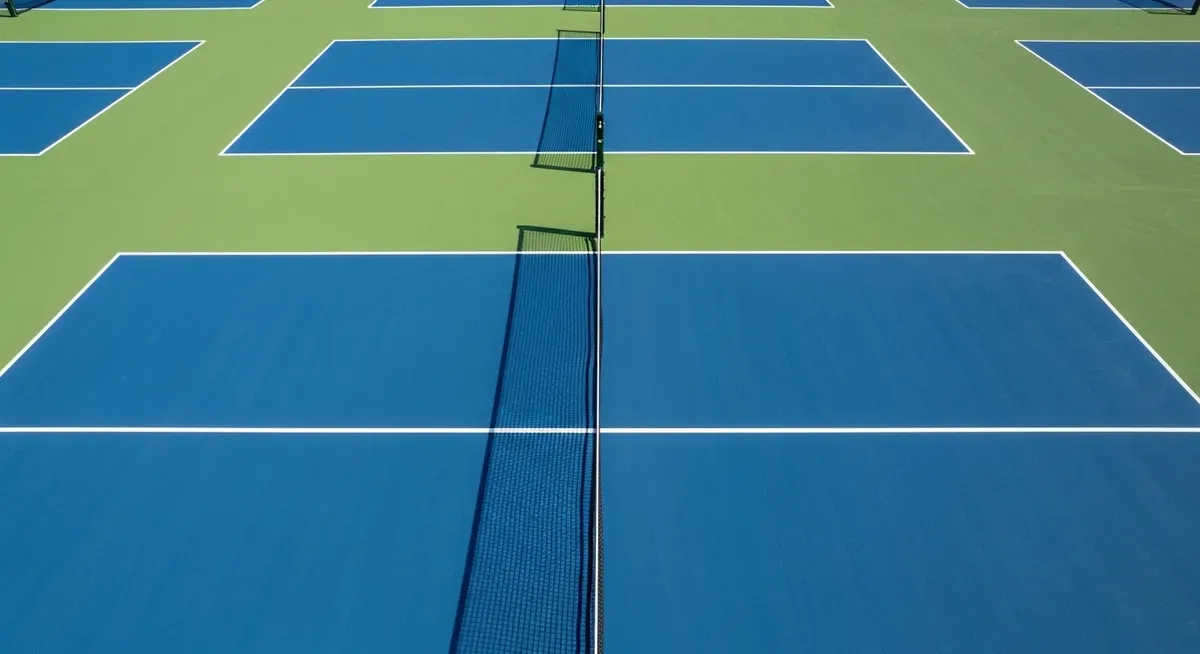
The best pickleball facilities offer cushioned court surfaces that protect aging joints, proper lighting for visibility, and a welcoming community atmosphere where beginners feel comfortable. Look for regulation-sized courts (20x44 feet) with clear markings, adequate spacing between courts for safety, and amenities like accessible restrooms and shaded seating areas. Quality facilities maintain their courts consistently, offer structured programs for different skill levels, and foster social connections that keep you coming back. The physical features matter, sure, but the community culture often determines whether you'll actually use your membership.
Table of Contents
- Essential Court Quality Standards That Matter Most
- Surface Materials and Cushioning Systems
- Court Dimensions, Markings, and Net Standards
- Maintenance Red Flags to Spot Immediately
- Facility Amenities That Enhance Your Playing Experience
- Climate Control and Weather Protection
- Lighting Quality for Extended Play Hours
- Comfort Amenities and Accessibility Features
- Community Atmosphere and Social Environment
- Assessing Age Demographics and Skill Level Mix
- Open Play Structure and Skill-Level Organization
- Welcoming Culture and New Player Integration
- Programs, Instruction, and Skill Development Options
- Beginner Programs and Adult Learning Approaches
- Coaching Credentials and Teaching Quality
- Pricing Transparency, Membership Options, and Value Assessment
- Membership Models and Fee Structures
- Contract Terms and Cancellation Policies
- Evaluating Overall Value Beyond Price
Essential Court Quality Standards That Matter Most
Walk onto any pickleball court and you're evaluating safety before you hit your first serve. The surface beneath your feet directly impacts your joints, your stability, and your injury risk. Most pickleball-related injuries occur in players aged 60 and older, with strains, sprains, and fractures topping the list (according to research published in the National Library of Medicine). The right court surface can significantly reduce these risks.
Essential Court Standards and Maintenance Red Flags
| Standard/Feature | Regulation Requirement | What to Check | Red Flag Indicators |
|---|---|---|---|
| Court Dimensions | 20 feet wide × 44 feet long | Measure if possible; verify both singles and doubles play | Undersized courts that don't meet regulation |
| Net Height | 36 inches at sidelines, 34 inches at center | Bring tape measure on first visit | Sagging nets or inconsistent height |
| Court Spacing | Minimum 10 feet between adjacent courts | Observe during active play sessions | Cramped layout creating collision risks |
| Line Markings | 2 inches wide, bright contrasting color (white/yellow) | Check visibility in various lighting conditions | Faded lines, worn markings, poor contrast |
| Surface Condition | Uniform texture, no cracks wider than ¼ inch | Run hand along surface, inspect entire court | Visible cracks, water pooling, uneven surfaces |
| Drainage | Proper water runoff, no pooling | Observe after rain or wet conditions | Standing water, soggy courts after rain |
Surface Materials and Cushioning Systems
Concrete courts are cheap to install and common at public parks. They're also unforgiving on knees and ankles. Acrylic surfaces offer better traction and slightly more give, while cushioned acrylic systems include foam or rubber underlayers that absorb impact. These cushioned systems cost more upfront but provide noticeable joint protection during extended play sessions.
Modular tile systems represent the premium option. These interlocking plastic tiles create a surface with built-in shock absorption and excellent drainage. They're particularly popular at dedicated pickleball clubs targeting older players who prioritize comfort over cost.
Surface quality degrades over time, that's just physics and weather at work. Look for courts with consistent texture across the entire playing area. Run your hand along the surface if possible, it should feel uniformly rough, not slick in patches. Slip-resistance matters enormously when you're pivoting quickly or reaching for low shots.
I'll never forget the first time I played on a quality modular tile system after months at my local asphalt courts. The difference hit me immediately during warm-up—my knees felt cushioned with each step, and when I lunged for a drop shot, the surface had just enough give that I didn't feel that jarring impact up through my shins. By the end of our two-hour session, I realized my lower back wasn't aching like it usually did, and I was sold on finding facilities with proper cushioning systems.
Indoor facilities typically maintain better surface conditions than outdoor courts exposed to temperature swings and UV damage. Outdoor acrylic surfaces fade and crack faster in harsh climates. Check for visible deterioration: small cracks expand, creating trip hazards, and faded areas may indicate weakened material that won't provide consistent ball bounce.
Court Dimensions, Markings, and Net Standards
Regulation pickleball courts measure exactly 20 feet wide by 44 feet long for both singles and doubles play (according to USA Pickleball). These dimensions aren't negotiable if you want to develop proper court positioning and shot selection. Some facilities squeeze undersized courts into available space. Avoid these, you'll develop bad habits that don't translate to standard courts.
Line visibility seems minor until you're calling a close shot near the baseline. Quality facilities use bright, contrasting colors (typically white or yellow) that remain visible in various lighting conditions. Lines should be two inches wide and clearly defined without significant wear or fading.
Net height specifications are precise: 36 inches at the sidelines, 34 inches at the center (USA Pickleball standards). Bring a tape measure on your first visit if you're serious about evaluation. Sagging nets change shot trajectories and create an inconsistent playing experience.
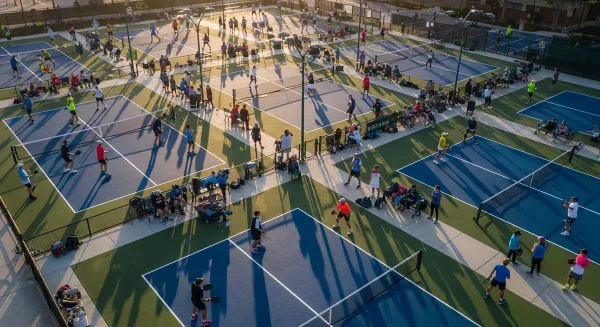
Court spacing matters more than most beginners realize. Adjacent courts should have at least 10 feet of clearance between them. Cramped facilities create collision risks when players chase wide shots. Look, nobody wants to crash into someone mid-rally because the courts are packed too tightly.
Maintenance Red Flags to Spot Immediately
Surface cracks wider than a quarter-inch indicate deferred maintenance. These expand with temperature changes and create genuine trip hazards. Water pooling in low spots suggests drainage problems that will make courts unplayable after rain and accelerate surface deterioration.
Faded court lines mean you're squinting to make line calls. Uneven surfaces affect ball bounce unpredictably. Loose or damaged nets should be tightened or replaced immediately, they're inexpensive fixes that quality facilities handle promptly.
Debris accumulation tells you everything about maintenance priorities. Leaves, dirt, or sand reduce traction and increase slip risk. Well-managed facilities sweep courts daily and address minor repairs before they become major problems. Environmental factors, including playing surface characteristics, contribute significantly to injury risk (National Library of Medicine research).
Facility Amenities That Enhance Your Playing Experience
Court quality gets you through the door. Amenities determine whether you stay and become a regular. The smaller court means less running compared to tennis, which is easier on joints (according to AARP), but you'll still need breaks, hydration, and comfortable spaces between games.
Pickleball Court Surface Comparison: Materials, Cushioning, and Cost
| Surface Type | Cost Level | Joint Impact | Durability | Best For | Maintenance Needs |
|---|---|---|---|---|---|
| Concrete | Low | High impact (hard on joints) | Very durable but degrades surface | Budget-conscious public parks | Minimal |
| Acrylic | Medium | Moderate impact with better traction | Good durability, fades in harsh climates | Most community facilities | Regular cleaning, periodic resurfacing |
| Cushioned Acrylic | Medium-High | Low impact (foam/rubber underlayer absorbs shock) | Good durability, requires underlayer maintenance | Facilities targeting older players | Monitor underlayer condition |
| Modular Tile Systems | Premium | Low impact (built-in shock absorption) | Excellent durability with excellent drainage | Dedicated pickleball clubs, comfort-focused players | Tile inspection and replacement as needed |
Climate Control and Weather Protection
Indoor temperature-controlled facilities eliminate weather uncertainty entirely. You're playing in consistent 68-72 degree comfort regardless of outside conditions. This consistency matters enormously for older adults who may struggle with temperature regulation or have conditions exacerbated by heat or cold.
Outdoor covered courts offer middle-ground protection. Roof structures block direct sun and light rain while maintaining airflow. These facilities work well in moderate climates but can't overcome extreme temperatures. Full exposure outdoor courts are fine for mild weather but become unusable during summer heat waves or winter cold snaps.
Shade availability at outdoor facilities isn't optional in warm climates. Look for covered spectator areas, shade structures between courts, or mature trees providing natural cooling. Wind barriers, fencing, walls, or strategic landscaping, prevent balls from blowing off course and reduce wind chill during cooler months.
Lighting Quality for Extended Play Hours
Proper court lighting requires 50-75 foot-candles for recreational play. That's technical jargon for "bright enough to track a small plastic ball moving quickly." Indoor facilities typically use LED systems that provide even, shadow-free illumination across the entire court surface.
Poor lighting creates dark spots where balls disappear from view. This becomes particularly problematic for aging vision, which already struggles with reduced contrast sensitivity and slower visual processing. Quality lighting eliminates shadows behind players and prevents glare that forces you to squint or lose track of the ball.
Outdoor lighting towers work adequately but rarely match indoor systems for consistency. They attract insects in warm months and create more dramatic shadows as lights age and bulbs burn out at different rates. Visit facilities during evening hours to evaluate actual playing conditions, not just daytime appearances.
Comfort Amenities and Accessibility Features
Clean, accessible restrooms located near courts matter more than you'd expect. Facilities should offer well-maintained bathrooms within easy walking distance. Nobody wants a three-minute hike when nature calls between games.
Comfortable seating between games allows proper recovery time. Look for benches with backs, not just bleachers. Accessible parking proximity reduces walking distance, particularly important if you're carrying equipment or managing mobility limitations. Designated spaces near entrances demonstrate attention to older adult needs.
Water fountains or hydration stations should be easily accessible from courts. Locker rooms with secure storage let you leave valuables safely while playing. ADA accessibility throughout the facility, ramps, wide doorways, accessible restrooms, indicates management that considers diverse player needs. These features create environments where regular physical activity feels sustainable rather than challenging (as emphasized by CDC guidelines for older adult activity).
Community Atmosphere and Social Environment
The social aspect is huge, people come for the exercise but stay for the friendships (according to AARP research on pickleball's popularity). You can have perfect courts and premium amenities, but a cliquish or unwelcoming atmosphere will drive you away faster than a cracked surface.
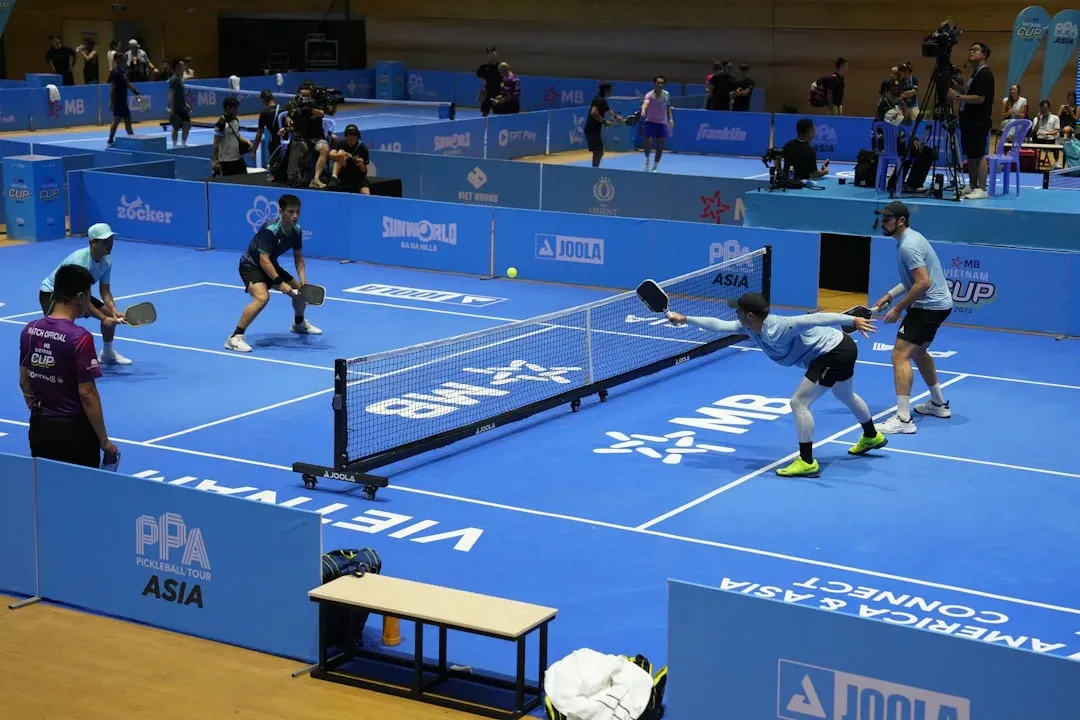
Assessing Age Demographics and Skill Level Mix
Visit during your preferred playing times and observe who's actually on the courts. Age diversity isn't necessarily bad, but facilities dominated by competitive 30-year-olds may not provide the social experience you're seeking if you're learning the game at 65.
Ask staff or members directly about typical player demographics. Quality facilities track this information and can tell you which time slots attract recreational players versus tournament-focused competitors. Some facilities designate specific hours for different skill levels or age groups, creating natural segmentation that helps everyone find appropriate matches.
Skill level diversity requires active management. Facilities should offer beginner-friendly sessions where newer players aren't intimidated by advanced competitors. Look for posted schedules that clearly indicate skill expectations for different time blocks. Ask how the facility handles skill matching during open play, vague answers suggest inadequate systems.
Watch how current members interact with newcomers. Do people introduce themselves? Do experienced players offer tips to beginners, or do they avoid playing with anyone below their level? These observations reveal more than any facility brochure.
Open Play Structure and Skill-Level Organization
Round-robin formats rotate players regularly, ensuring you're not stuck with mismatched partners all morning. Challenge courts let players of similar skill compete while others wait their turn. Skill-bracketed sessions separate beginners from advanced players, reducing intimidation and creating more balanced games.
Court reservation systems should be transparent and fair. Some facilities use first-come-first-served approaches, while others implement online booking or sign-up sheets. The best systems prevent court hogging by limiting consecutive play time and ensuring everyone gets opportunities.
Ask about wait times during peak hours. Facilities with insufficient courts for their membership create frustration and long waits between games. This discourages regular attendance, particularly for older adults with limited energy for extended facility visits.
Welcoming Culture and New Player Integration
Observable indicators tell you everything about culture. Do members greet newcomers when they arrive? Are there formal player introductions before open play sessions? Quality facilities often assign experienced players as informal mentors for beginners, creating natural integration rather than leaving newcomers to figure things out alone.
Beginner clinics demonstrate commitment to new player development. Posted etiquette guidelines help everyone understand expectations for court behavior, rotation systems, and skill-level honesty. Active community boards, physical or digital, sharing schedules, tournament results, and social events indicate engaged membership.
Communication systems matter. Does the facility use email newsletters, text groups, or apps to keep members informed? Can you easily learn about schedule changes, special events, or court closures? Poor communication creates frustration and reduces attendance.
Programs, Instruction, and Skill Development Options
Structured programs accelerate learning and reduce injury risk by teaching proper technique from the start. Self-taught players often develop bad habits that become harder to correct later and increase strain on joints and muscles.
Beginner Programs and Adult Learning Approaches
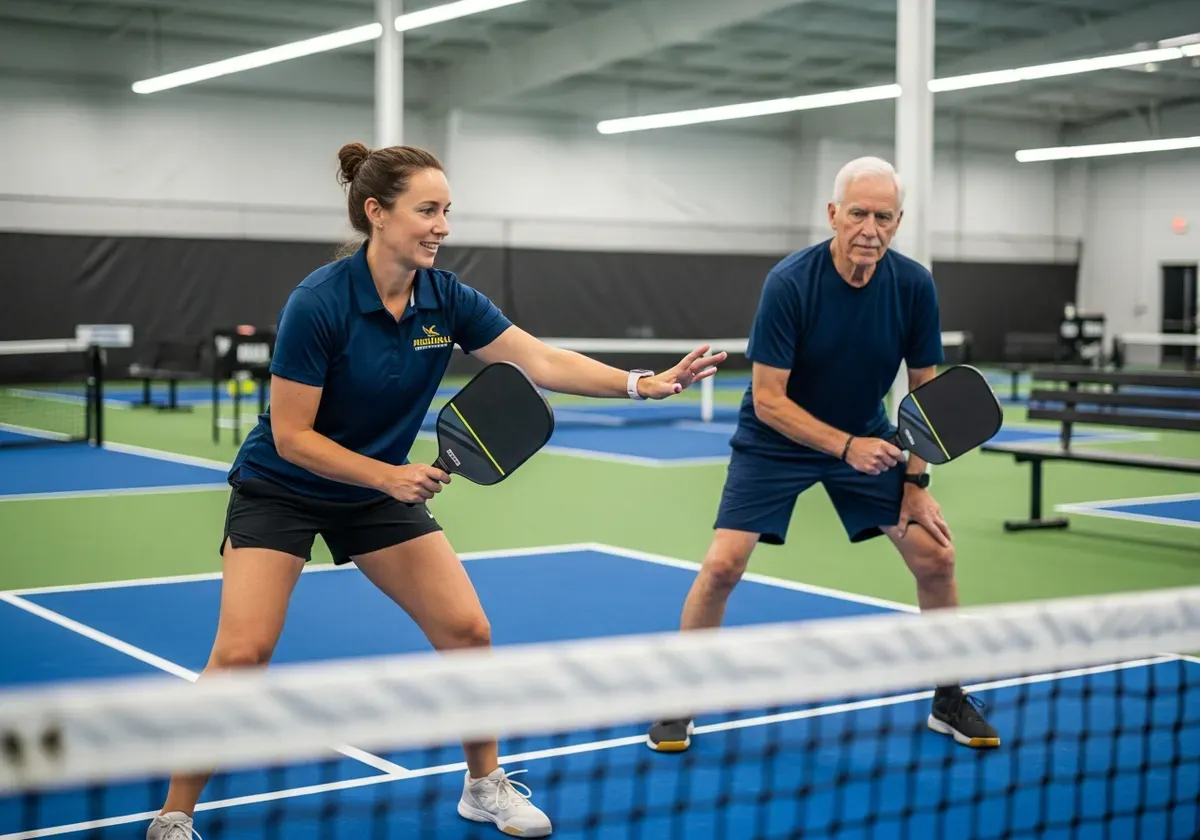
Quality beginner instruction uses small class sizes, ideally 4-6 students per instructor, allowing personalized attention and technique correction. Adult learners need different pacing than children. We process instructions differently and often require more repetition to develop muscle memory for new movement patterns.
Progressive skill building starts with basic serves and returns before advancing to complex strategies. Programs should span multiple sessions (typically 4-8 weeks) rather than cramming everything into a single clinic. This spacing allows practice time between lessons, reinforcing learning through repetition.
Instructors experienced with adult learners understand our concerns about injury, our need for clear explanations of "why" behind techniques, and our preference for structured learning over chaotic drills. Ask about instructor backgrounds specifically with older adult students. Tennis teaching experience doesn't automatically translate to effective pickleball instruction for seniors.
"Adult learners need a different approach than kids. They want to understand the biomechanics and strategy behind each shot, not just be told to hit it a certain way," says Sarah Ansboury, former professional tennis player and IPTPA-certified pickleball instructor who specializes in teaching players over 50.
Typical beginner programs run $80-150 for multi-week series. Private lessons cost $40-80 per hour depending on instructor credentials and location. Group clinics offer better value and built-in social interaction, though private instruction accelerates learning for those willing to invest more.
Coaching Credentials and Teaching Quality
Professional Pickleball Registry (PPR) certification indicates formal training in teaching methodology. USA Pickleball offers coaching certification programs at various levels. These credentials matter, they demonstrate instructors have studied teaching progressions, common errors, and age-appropriate modifications.
Watch instructors teach if possible before committing to programs. Effective teachers demonstrate clearly, provide specific feedback rather than generic encouragement, and create positive learning environments where mistakes are expected and corrected constructively. They should modify drills for different fitness levels and explain injury prevention principles alongside technique.
Ask about instructor-to-student ratios for various programs. Ratios above 8:1 reduce individual attention significantly. Request information about progression pathways, can you advance from beginner to intermediate programs at the same facility, or do offerings stop after introductory classes?
Pricing Transparency, Membership Options, and Value Assessment
Hidden fees and unclear pricing structures create frustration. Quality facilities provide straightforward pricing information upfront, not after you've invested time touring and asking questions.
Membership Models and Fee Structures
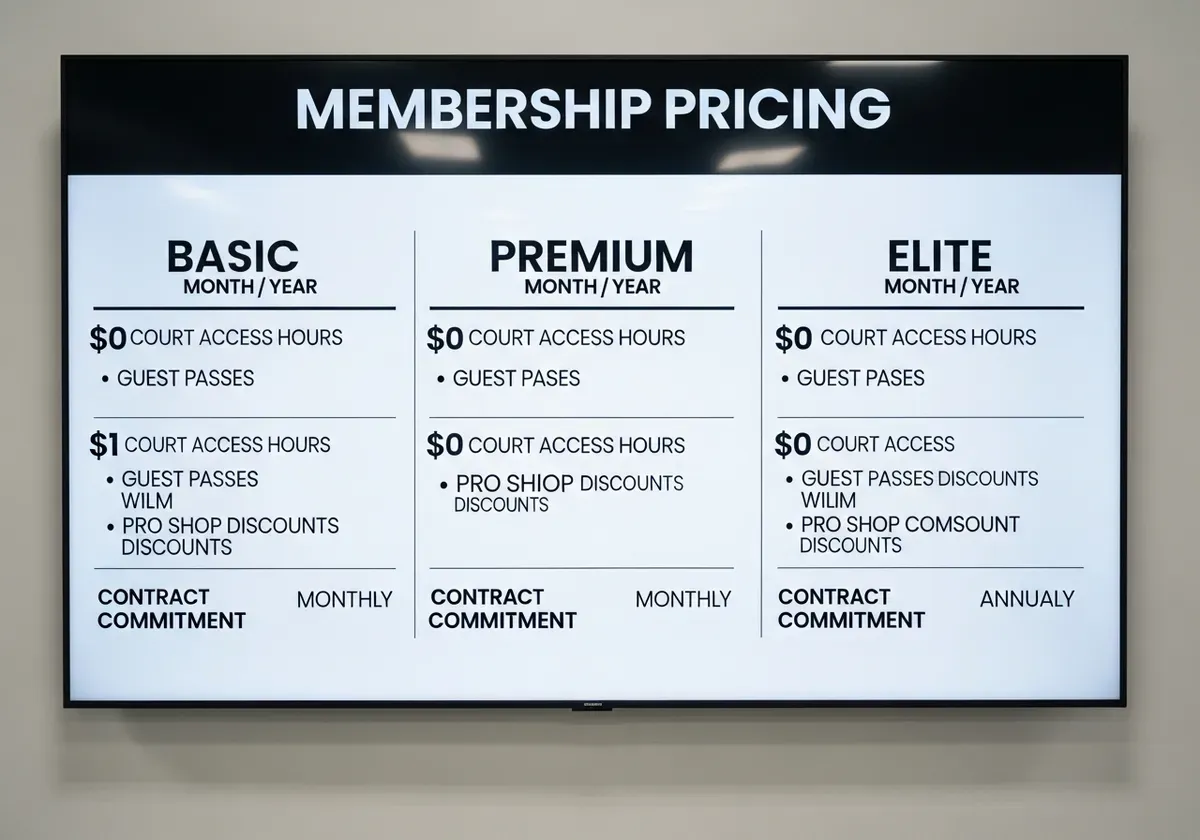
Monthly memberships typically range $50-150 depending on location and amenities. Annual memberships offer discounts but require upfront commitment. Punch cards (10-20 play sessions) work well if you're testing facility fit before committing to ongoing membership.
Drop-in fees ($8-15 per session) let you sample facilities without membership obligations. Some facilities charge initiation fees ($50-200) on top of monthly dues. Others include equipment rentals, lessons, or league play in membership costs while competitors charge separately for each.
Compare total costs including all fees, not just advertised membership rates. A facility charging $75 monthly with free equipment rental and included beginner clinics may cost less overall than one advertising $50 monthly but charging separately for everything else.
Contract Terms and Cancellation Policies
Month-to-month agreements provide flexibility to leave if the facility doesn't meet expectations. Annual contracts lock you in but usually offer 15-25% discounts versus monthly rates. Read cancellation policies carefully, some facilities require 30-60 days notice and charge penalties for early termination.
Trial periods or satisfaction guarantees reduce commitment risk. Facilities confident in their offerings often provide 30-day money-back guarantees or discounted first-month rates. Honestly, this demonstrates they're not worried about retention once you experience their community and amenities.
Ask about membership freezes for medical issues, travel, or seasonal absence. Flexible facilities accommodate life circumstances without financial penalties. Rigid policies suggest profit prioritization over member relationships.
Evaluating Overall Value Beyond Price
The cheapest facility rarely provides the best value. Calculate cost per actual playing session based on your realistic attendance. A $100 monthly membership costs $3.33 per visit if you play 30 times monthly, but $25 per visit if you only play four times.
Factor in driving distance and time. A facility 30 minutes away may be cheaper but costs more in time and gas than a slightly pricier option 10 minutes from home. Convenience strongly influences whether you'll maintain regular activity, critical for meeting the recommended 150 minutes weekly of moderate-intensity activity for older adults (CDC guidelines).
Consider the complete package: court quality, amenities, instruction, and community atmosphere together determine value. Premium facilities justify higher costs through superior maintenance, better programs, and welcoming cultures that keep you engaged long-term. Budget facilities work fine if courts meet safety standards and the community fits your needs, but rock-bottom pricing often signals compromises somewhere.
Your time investment matters as much as your membership fee when calculating true cost per session. According to the Bureau of Labor Statistics' 2023 American Time Use Survey, Americans value their leisure time at approximately $28 per hour based on median wage calculations, meaning a 30-minute drive each way adds roughly $28 in opportunity cost to every playing session. Over a year of three-times-weekly play, that extra commute totals 156 hours—equivalent to nearly four full weeks of work time that could have been spent on court or with family.
Visit multiple facilities before deciding. Most offer free trial visits or guest passes. Play during your preferred times, use the amenities, talk with members, and observe the atmosphere. The best facility for you balances physical quality, social environment, and cost within your budget while supporting the regular activity that keeps you healthy and connected.
Related Articles
- Find Pickleball Courts Near You: Complete Location Guide
- Indoor Pickleball Courts: Finding Year-Round Play Locations
- Outdoor Pickleball Courts: Finding the Best Open-Air Venues
- Pickleball Court Shortage: Understanding Access Problems and Solutions
- Pickleball Clubs & Lessons: Find Local Programs and Training
- Pickleball Equipment & Gear: Complete Buyer's Guide
Frequently Asked Questions
What's the difference between acrylic and modular tile court surfaces?
Acrylic surfaces offer better traction than concrete but provide minimal cushioning, while modular tile systems feature interlocking plastic tiles with built-in shock absorption and superior drainage. Modular tiles cost more upfront but provide significantly better joint protection during extended play, making them ideal for older players prioritizing comfort.
How can I check if a court surface is safe before committing to a membership?
Run your hand along the court surface to check for uniform texture—it should feel consistently rough without slick patches. Inspect for visible cracks wider than ¼ inch, uneven areas, and water pooling. Visit during active play to observe spacing between courts and watch how the surface performs during actual gameplay.
What court dimensions should I verify when visiting a facility?
Regulation pickleball courts must be 20 feet wide by 44 feet long with a net height of 36 inches at the sidelines and 34 inches at center. Bring a tape measure on your first visit to verify these dimensions, as undersized courts affect gameplay and may indicate a facility that cuts corners on other standards.
Are outdoor or indoor pickleball courts better for long-term play?
Indoor facilities typically maintain better surface conditions because outdoor acrylic courts are exposed to temperature swings and UV damage that cause faster fading and cracking. If you play frequently, indoor courts will provide more consistent playing conditions and longer court lifespan.
What maintenance red flags should I watch for at a facility?
Red flags include sagging or inconsistently-height nets, faded or worn line markings with poor contrast, standing water or soggy courts after rain, cramped court spacing creating collision risks, and visible cracks or uneven surfaces. These issues indicate the facility may not prioritize player safety and experience.
Why does court cushioning matter for injury prevention?
Most pickleball injuries occur in players aged 60 and older, with strains, sprains, and fractures being most common. Cushioned surfaces with foam or rubber underlayers absorb impact and reduce the jarring stress on joints during quick movements, lunges, and pivoting—significantly decreasing injury risk during extended play sessions.
What should I look for in court spacing and layout?
Courts should have a minimum of 10 feet of spacing between adjacent courts to prevent collisions during play. Observe the facility during active play sessions to see if players can move freely without interference, and check that the overall layout doesn't feel cramped or unsafe.