Outdoor Pickleball Courts: Finding the Best Open-Air Venues
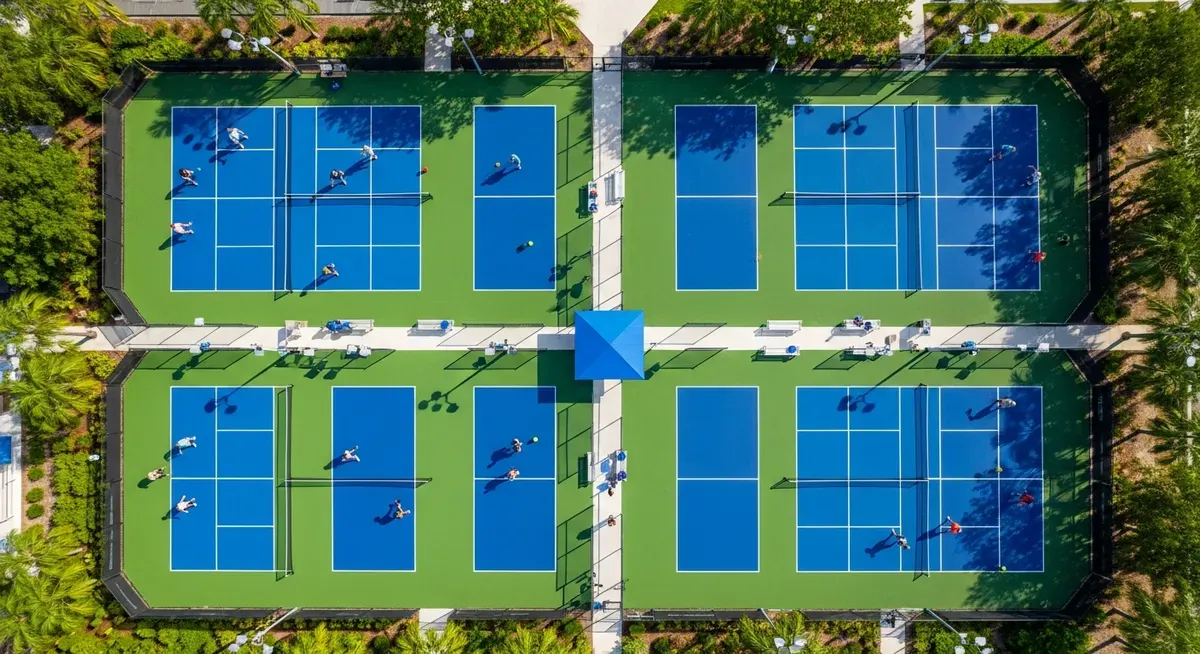
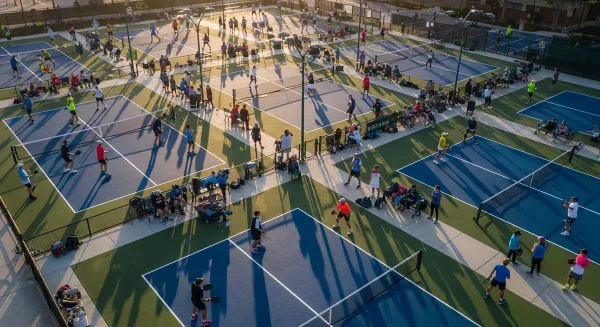
Finding quality outdoor pickleball courts starts with understanding what's available in your area and what features matter most for your playing experience. The best open-air venues combine proper court surfaces, convenient amenities, and active player communities. You'll find courts in public parks, recreation centers, and private clubs, each offering different advantages in terms of cost, maintenance, and atmosphere.
Table of Contents
- Understanding Different Types of Outdoor Pickleball Venues
- Dedicated Pickleball Facilities vs. Multi-Use Courts
- Public Parks vs. Private Clubs: What to Expect
- Essential Features to Look for in Quality Outdoor Courts
- Court Surface Materials: Pros and Cons
- Accessibility and Comfort Amenities
- Safety Considerations for Outdoor Play
- How to Find Outdoor Pickleball Courts in Your Area
- Using Online Court Finders and Apps
- Connecting with Local Pickleball Communities
- Evaluating Weather and Seasonal Considerations
- Best Times to Play Outdoors by Season
- Dealing with Sun, Heat, and Weather Protection
- Making Your First Visit to a New Outdoor Venue
Understanding Different Types of Outdoor Pickleball Venues
The outdoor pickleball landscape includes several distinct venue types. Public parks often repurpose tennis courts, adding temporary pickleball lines. Recreation centers maintain dedicated courts with better upkeep. Private clubs offer premium facilities but require membership fees.
Comparison of Outdoor Pickleball Venue Types
| Venue Type | Cost | Court Maintenance | Amenities | Atmosphere | Best For |
|---|---|---|---|---|---|
| Public Parks | Free | Municipal budget (less frequent) | Basic or minimal | Casual, welcoming | Beginners, budget-conscious players |
| Recreation Centers | Low daily fees | Regular upkeep | Moderate (parking, restrooms) | Semi-structured | Intermediate players |
| Private Clubs | Monthly/annual membership | Weekly maintenance | Comprehensive (covered courts, social events) | Structured, social | Serious players, skill-level groups |
| Dedicated Pickleball Facilities | Daily fees or membership | Professional standards | Premium (multiple courts, spacing) | Competitive | Advanced players, tournaments |
Each venue type attracts different player communities and skill levels. Knowing these differences helps you choose courts that match your preferences and playing style.
Dedicated Pickleball Facilities vs. Multi-Use Courts
Purpose-built pickleball complexes deliver the best playing experience. Court dimensions are exact, nets sit at the regulation 36-inch height at the sidelines, and surface quality stays consistent. These facilities typically feature multiple courts, proper spacing between playing areas, and amenities designed specifically for pickleball players (According to the National Recreation and Park Association). Think of it like a five-star hotel versus a roadside inn, both have beds, but the experience isn't comparable.
Multi-use courts paint a different picture. Tennis courts with pickleball lines suffice for casual play, but the larger tennis court can be distracting. You'll see extra boundary lines, and the tennis net posts sit in awkward positions. The net height doesn't always adjust properly to pickleball specifications.
Dedicated facilities often draw more serious players. The skill level tends higher because committed players seek out the best courts. Multi-use venues welcome beginners more readily, the atmosphere feels less intimidating.
Cost differs significantly. Purpose-built complexes may charge daily fees or require memberships. Converted tennis courts in public parks are free, though you might wait longer for open courts during peak hours.
Public Parks vs. Private Clubs: What to Expect
Public park courts cost nothing, that's their biggest advantage. You show up, sign in if required, and play. The trade-off comes in maintenance quality and amenities. Parks maintain courts on municipal budgets, which means resurfacing happens less frequently and nets wear out before replacement.
Court availability at public venues follows a first-come pattern during open play hours. Popular parks get crowded on weekday mornings when retirees fill the courts. You might wait thirty minutes or more for a game during peak times.
Private clubs charge monthly or annual fees but deliver better experiences. Courts get maintained weekly, nets stay taut, and surface cracks get repaired promptly. Most clubs organize regular round-robin sessions and skill-level play groups. Well, the social atmosphere tends more structured compared to the casual vibe at public courts.
Private facilities typically limit court access to members and their guests. This restriction means less crowding and more predictable playing opportunities. Many clubs offer covered courts or indoor backup options when weather turns bad.
Essential Features to Look for in Quality Outdoor Courts
Quality outdoor courts share several key characteristics. The surface should feel smooth underfoot without cracks or uneven patches. Net installation matters more than most players realize, a sagging net changes the game completely. Court markings need clear visibility because faded lines cause constant disputes about whether balls landed in or out.
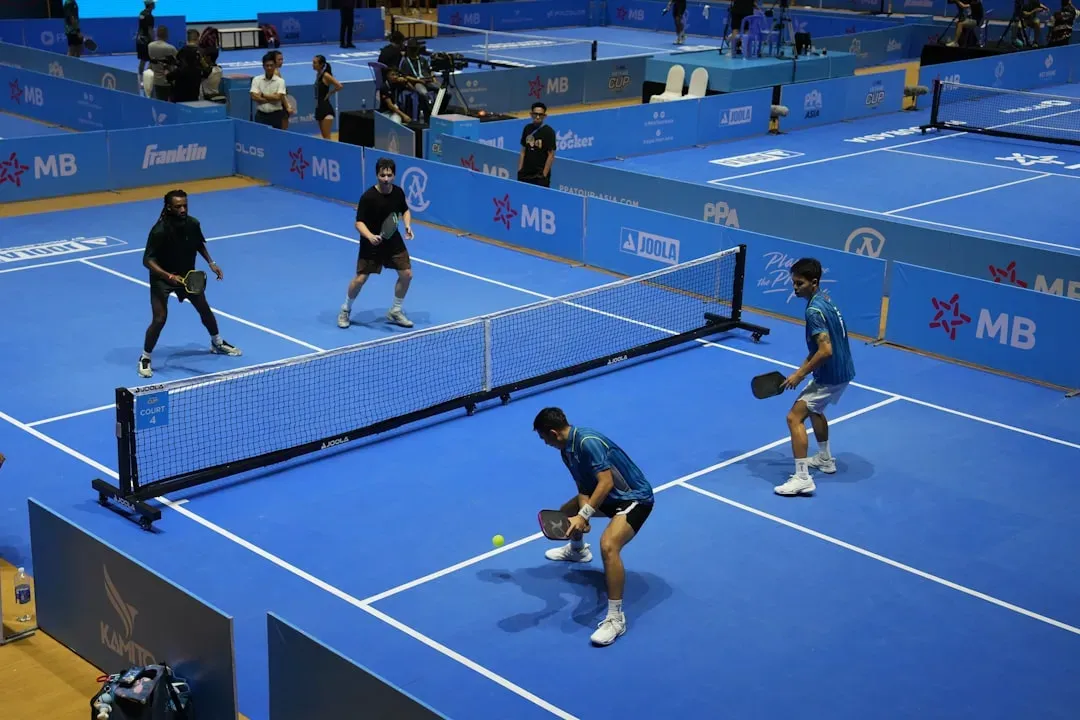
Lighting extends your playing season into evening hours. Amenities like shade structures, benches, and water access transform a basic court into a comfortable venue for extended sessions.
Court Surface Materials: Pros and Cons
Asphalt surfaces dominate public park installations. They cost less initially and handle weather exposure reasonably well. The downside hits your joints, asphalt provides minimal shock absorption. Ball bounce stays consistent on properly maintained asphalt, but summer heat makes these surfaces uncomfortably hot.
Concrete courts last longer than asphalt and resist cracking better. They deliver excellent ball bounce consistency. However, concrete feels even harder on knees and ankles during long playing sessions. These surfaces work better in cooler climates where heat absorption matters less.
Cushioned acrylic surfaces represent the premium option. Multiple layers include a cushioning base that significantly reduces joint impact. "The surface you play on significantly impacts injury risk and performance. Hard surfaces like concrete and asphalt offer consistency but provide minimal shock absorption, which can lead to repetitive stress injuries in players' knees, ankles, and hips," says Dr. Brian Hainline, Chief Medical Officer at the National Collegiate Athletic Association (NCAA) and sports medicine expert who has studied court surface impacts on athletic performance. These surfaces cost three to four times more than basic asphalt but make a noticeable difference for players concerned about joint health.
Post-tensioned concrete with acrylic coating offers the best combination of durability and playability. You'll find these surfaces at dedicated pickleball facilities and high-end clubs. Worth every penny.
Accessibility and Comfort Amenities
Parking proximity matters more as you age. Courts within 100 feet of parking lots reduce the burden of carrying equipment and dealing with fatigue after long playing sessions. Look for venues with designated pickleball parking or nearby spaces.
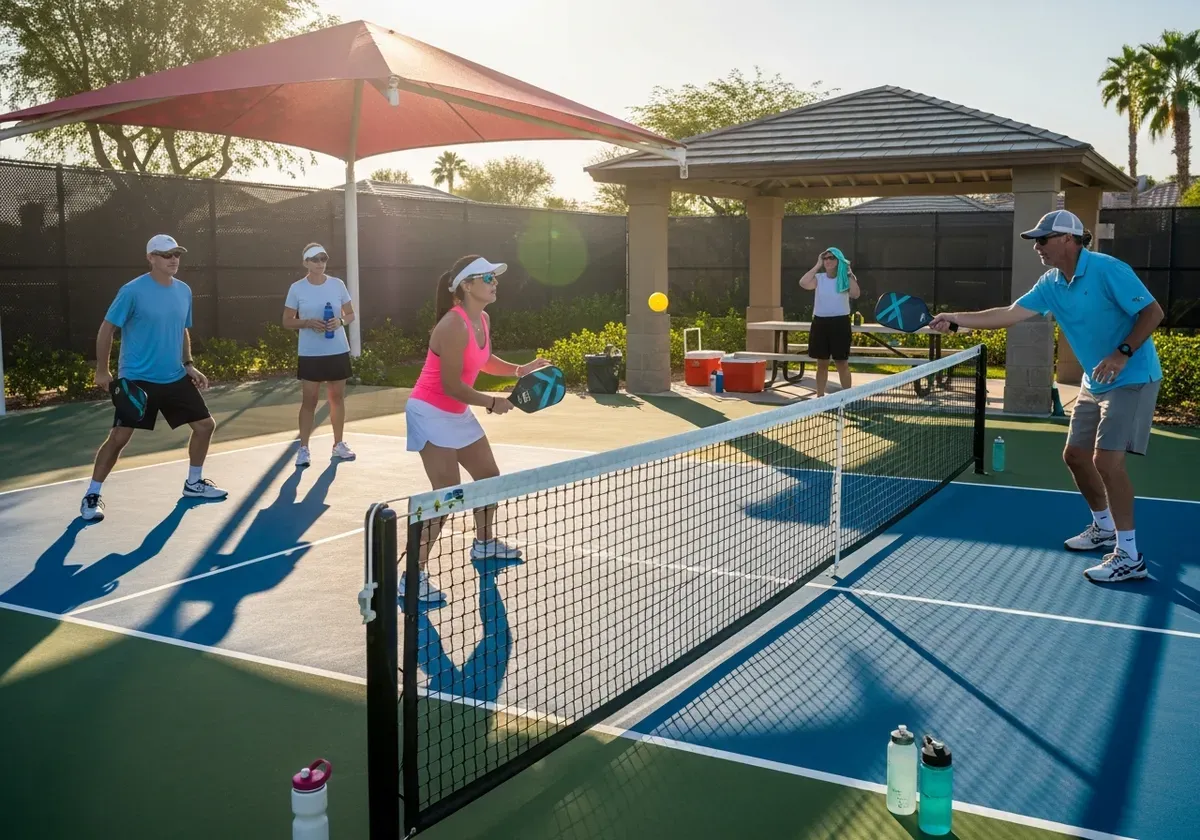
Bench seating between courts lets you rest between games without leaving the playing area. Covered pavilions or shade structures become essential during summer months. Direct sun exposure for two hours drains your energy fast.
Clean, accessible restrooms make or break the experience at outdoor venues. Facilities should sit within a short walk from courts. Water fountains or bottle-filling stations near courts encourage proper hydration. Many players bring coolers, but having water access on-site matters for safety.
Safety Considerations for Outdoor Play
Court spacing prevents collisions and injuries. Quality venues maintain at least 10 feet between court boundaries and fences or other courts. This buffer zone gives you room to chase balls safely without running into obstacles.
Proper fencing around the entire court area contains errant balls and protects players from balls rolling in from adjacent courts. Six-foot fencing works adequately, eight-foot or higher fencing performs better. Gates should close securely but open easily from inside.
Surface condition requires regular inspection. Cracks, pooling water, or loose material create tripping hazards. Visit courts during different weather conditions before committing to regular play there.
How to Find Outdoor Pickleball Courts in Your Area
Locating quality outdoor courts takes some detective work. Online directories provide starting points, but current information about court conditions and playing schedules requires deeper investigation. The best approach combines digital tools with community connections to build a complete picture of your local options.
Outdoor Pickleball Court Surface Materials
| Surface Type | Cost | Durability | Joint Impact | Ball Bounce | Best Climate | Maintenance |
|---|---|---|---|---|---|---|
| Asphalt | Low | Moderate (5-7 years) | High impact (hard on joints) | Consistent when maintained | Any | Regular seal coating needed |
| Concrete | Moderate | High (10+ years) | Very high impact (hardest) | Excellent consistency | Cooler climates | Minimal, crack repair |
| Cushioned Acrylic | High | High (8-10 years) | Low impact (protective) | Excellent consistency | Any | Regular cleaning and recoating |
Using Online Court Finders and Apps
Places 2 Play from USA Pickleball maintains the most comprehensive court directory available. The database includes thousands of locations with details about indoor versus outdoor courts, number of courts at each venue, and whether installations are permanent or temporary (According to USA Pickleball). You can search by zip code or city and filter results to show only outdoor courts.
The interface shows user-submitted photos and reviews. Pay attention to review dates, information older than six months might not reflect current conditions. Recent photos reveal actual court quality better than official venue descriptions.
Pickleheads offers another searchable database with similar filtering options. The platform includes a "check-in" feature showing when other players visited courts recently. This real-time information helps verify that courts remain open and maintained.
Playtime Scheduler goes beyond simple court listings. Many venues use this platform to post open play schedules, organized games, and court reservation systems. Check whether courts in your area use Playtime, it saves phone calls and uncertainty about when you can actually play.
Read user comments carefully for accuracy. Look for mentions of court surface conditions, typical crowd sizes, and whether the venue welcomes drop-in players. One negative review means little, but patterns in multiple reviews reveal real issues.
Connecting with Local Pickleball Communities
Facebook groups for local pickleball communities share insider knowledge that never appears in official directories. Search for groups named "[Your City] Pickleball" or "[Your County] Pickleball Players." These groups post updates about court conditions, organize group play sessions, and warn members about temporary closures.
Members discuss which venues welcome beginners versus courts dominated by advanced players. This information helps you find comfortable playing environments when starting out. I discovered my favorite outdoor court through a Facebook group recommendation that changed everything. A member posted about a newly resurfaced complex on the west side with six courts, pristine nets, and almost no wait times on weekday mornings—I showed up the next day at 8 AM and found a welcoming group of regulars who immediately invited me into their rotation. The courts were even better than described, with that perfect grip underfoot and not a single crack in the surface.
Regional pickleball clubs maintain email lists or newsletters announcing playing opportunities. USA Pickleball's website lists affiliated clubs by state. Contact clubs near you to ask about outdoor court recommendations and visitor policies.
Word-of-mouth recommendations from players at your current courts often lead to discovering hidden gems. Strike up conversations during breaks and ask where else people play. Experienced local players know which courts offer the best conditions and most welcoming atmospheres.
Evaluating Weather and Seasonal Considerations
Outdoor pickleball requires planning around weather patterns. Temperature extremes, sun exposure, wind, and precipitation all affect playability and safety. Understanding seasonal challenges helps you choose the right times and venues for comfortable outdoor play throughout the year.
Best Times to Play Outdoors by Season
Summer demands early morning or evening sessions to avoid peak heat. Courts become uncomfortably hot between 11 a.m. and 5 p.m. in most regions during June through August. Morning play before 9 a.m. offers cooler temperatures and calmer wind conditions. Evening sessions after 6 p.m. work well if courts have adequate lighting.
Older adults face higher risks from heat-related health problems, so avoiding outdoor activity during the hottest parts of the day becomes especially important. Playing when temperatures exceed 90°F requires extra caution regardless of time (According to the National Institute on Aging).
Winter play works best during midday hours when temperatures peak. Courts between 10 a.m. and 2 p.m. receive maximum sun exposure and warmth. Avoid outdoor play when temperatures drop below 40°F, cold air stiffens joints and increases injury risk.
Spring and fall offer ideal outdoor playing conditions. Mild temperatures from March through May and September through November let you play comfortably throughout the day. These shoulder seasons present the best weather windows for outdoor pickleball.
Dealing with Sun, Heat, and Weather Protection
Sun protection requires multiple strategies. Wide-brimmed hats shield your face and neck better than baseball caps. Sunglasses with polarized lenses reduce glare and improve ball visibility. Apply broad-spectrum sunscreen with SPF 30 or higher to exposed skin, reapply every two hours during extended play.
Lightweight, moisture-wicking clothing in light colors keeps you cooler than cotton. Long-sleeve shirts designed for sun protection work better than short sleeves with sunscreen on your arms. The fabric blocks UV rays while allowing air circulation.
Hydration starts before you reach the courts. Drink 16 ounces of water two hours before playing. Bring a large water bottle and sip between games. Honestly, most players underestimate how much fluid they lose during outdoor play. Waiting until you feel thirsty means you're already dehydrated.
Take breaks in shaded areas between games. Courts with covered pavilions or nearby trees provide essential relief during hot weather.
Wind affects ball flight significantly. Steady winds above 10 mph make precise shot placement difficult. Courts with windscreens or natural barriers like trees or buildings play better on breezy days. Check weather forecasts for wind speed before committing to outdoor sessions.
Wet courts become dangerous quickly. Even light rain creates slippery surfaces on most outdoor court materials. Wait at least 30 minutes after rain stops before playing to let courts dry. Puddles indicate drainage problems, avoid those courts after precipitation.
Making Your First Visit to a New Outdoor Venue
Arriving prepared at a new outdoor court makes your first visit smoother. Bring your own paddle, balls, and water rather than assuming the venue provides equipment. Most outdoor courts operate on a self-service basis without staff or equipment rentals.
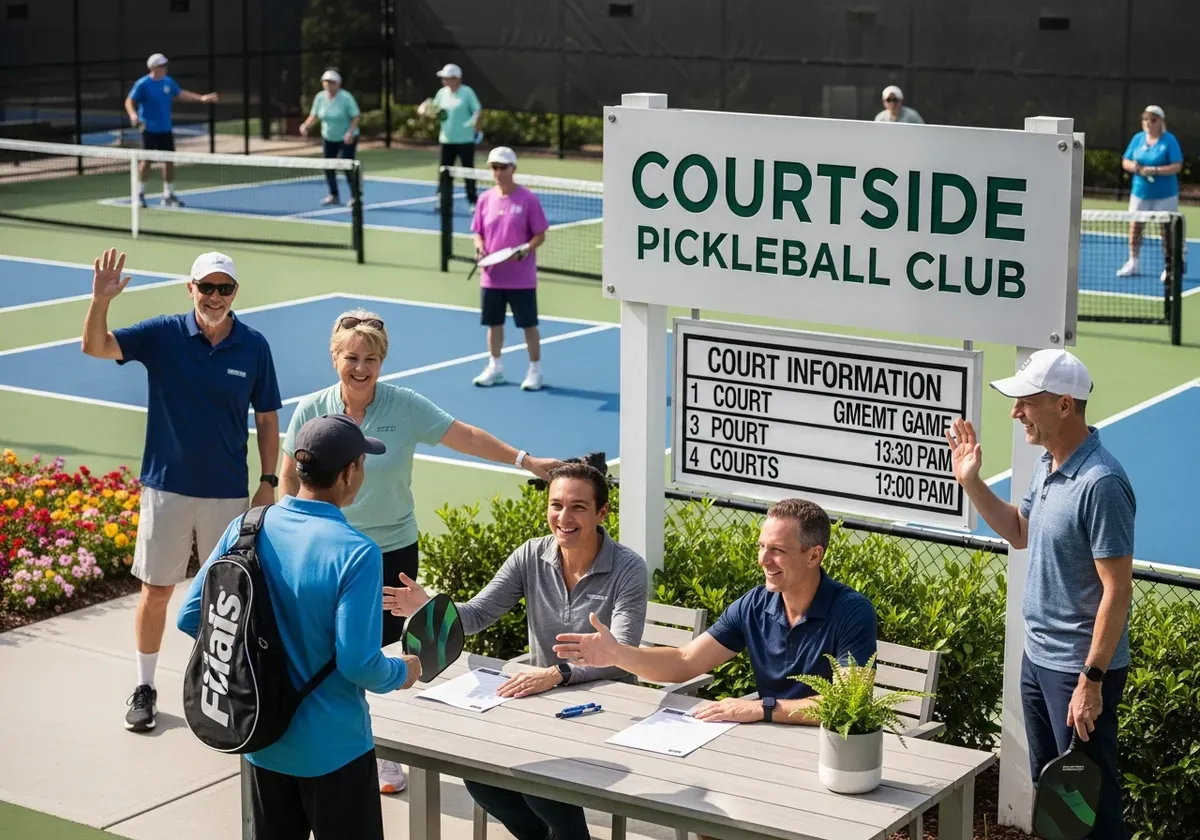
Observe the local culture before jumping into games. Some venues use paddle queues where players place paddles on a bench to indicate they're waiting for the next game. Others use sign-up sheets or informal verbal agreements. Watch for a few minutes to understand the system.
Introduce yourself to players between games. The pickleball community generally welcomes newcomers, especially at public courts. Mention that you're visiting for the first time and ask about local customs or rules. Most players appreciate the courtesy and offer helpful information.
Assess court conditions during your first visit. Walk the court surface looking for cracks, uneven areas, or debris. Check net height and tension. Note the quality of court markings and whether you can see lines clearly in current lighting conditions.
Test amenities like restrooms, water fountains, and parking before committing to regular play at the venue. Distance from parking to courts matters more after you've played several games and fatigue sets in.
According to the 2023 USA Pickleball Places to Play survey, 78% of players report court surface quality as their primary factor when choosing where to play regularly, ranking above proximity to home and availability of open courts. The Sports & Fitness Industry Association found that players who assess venue conditions during initial visits play an average of 2.3 times per week at their chosen facility, compared to 1.4 times weekly for those who don't evaluate amenities beforehand. Your first-visit checklist directly correlates with long-term satisfaction—players who test parking-to-court distance and restroom access during their initial session are 64% more likely to return within two weeks, according to 2022 data from the National Recreation and Park Association. Pay attention to the skill level and pace of play. Some outdoor venues attract competitive players running intense games. Others maintain a relaxed recreational atmosphere. Neither is better, but matching the venue culture to your preferences determines whether you'll enjoy returning.
Note the typical crowd size at different times. Ask regular players when courts get busiest and when you can usually get on quickly. This information helps you plan future visits around your schedule and patience for waiting.
Related Articles
- Find Pickleball Courts Near You: Complete Location Guide
- Best Pickleball Facilities Near You: What to Look For
- Indoor Pickleball Courts: Finding Year-Round Play Locations
- Pickleball Court Shortage: Understanding Access Problems and Solutions
- Pickleball Clubs & Lessons: Find Local Programs and Training
- Pickleball Equipment & Gear: Complete Buyer's Guide
Frequently Asked Questions
What's the difference between playing on a dedicated pickleball court versus a converted tennis court?
Dedicated pickleball courts have exact regulation dimensions, proper net height (36 inches), and consistent surface quality with proper spacing between courts. Converted tennis courts have distracting extra boundary lines, awkwardly positioned tennis net posts, and nets that don't always adjust to pickleball specifications, making them better suited for casual beginners.
How much does it typically cost to play at outdoor pickleball courts?
Public parks are free but may have wait times during peak hours. Recreation centers charge low daily fees. Private clubs require monthly or annual membership fees. Dedicated pickleball facilities charge daily fees or memberships, with costs varying based on location and amenities offered.
When is the best time to visit public park pickleball courts to avoid crowds?
Avoid weekday mornings when retirees typically fill courts, as you may wait 30+ minutes for open play. Off-peak times like early afternoons on weekdays or less popular parks tend to have shorter wait times and more available courts.
What amenities should I look for in a quality outdoor pickleball venue?
Look for proper court maintenance, adequate parking, restrooms, shade or weather protection, multiple courts with proper spacing, and ideally an active player community. Private clubs often offer covered courts, social events, and skill-level groupings as additional benefits.
Are private pickleball clubs worth the membership fee?
Private clubs are worth it if you play regularly and value consistent court quality, weekly maintenance, organized play sessions, and social atmosphere. They're ideal for serious or intermediate players; beginners on a budget may prefer starting at free public parks.
How do I find outdoor pickleball courts near me?
Use online court finder apps and websites, search your local parks and recreation department websites, or connect with local pickleball communities through social media groups and clubs who can recommend nearby venues and playing times.
What should I bring to protect myself from sun and heat during outdoor play?
Bring sunscreen, a hat or visor, sunglasses, and plenty of water to stay hydrated. Choose venues with shade structures or trees when possible, and consider playing during cooler parts of the day like early morning or late afternoon to avoid peak heat exposure.
Is it better to start as a beginner at a public park or private club?
Public parks are ideal for beginners because they're free, have a casual welcoming atmosphere, and less intimidating skill levels. Once you develop intermediate skills and want structured play groups and better court conditions, private clubs or recreation centers become better options.